



Introduction
Choosing the right hosting plan is essential for your website’s speed, security, and long-term growth. Most businesses start with shared hosting because it’s affordable and easy — but as traffic increases, many outgrow it and move to VPS hosting for better performance and control.
In this article, you’ll learn the real differences between Shared Hosting and VPS Hosting, why each one exists, how to know when it’s time to upgrade, and which type is best for your business in 2025.
📺 Watch: VPS vs Shared Hosting Explained
What Is Shared Hosting?
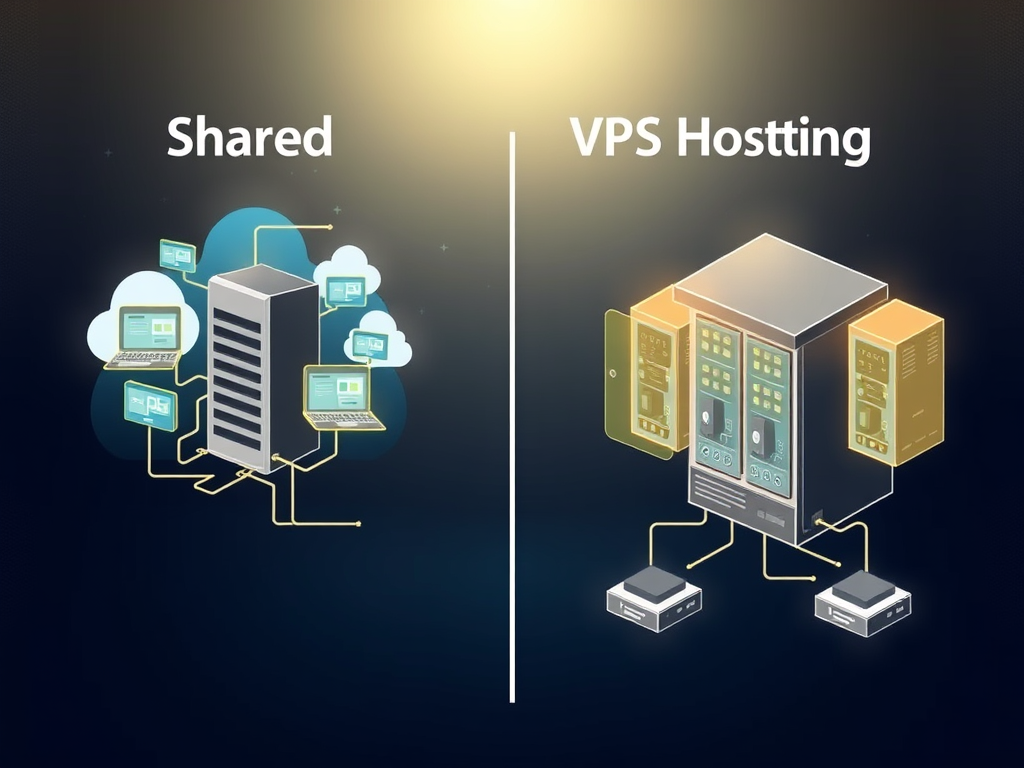
Shared hosting means your website shares a single server’s resources with many other websites.
It’s the most affordable hosting option and usually the easiest to set up.
Shared hosting is ideal for:
- New businesses
- Basic informational websites
- Blogs
- Local service companies
- Businesses with low to moderate traffic
Benefits of Shared Hosting:
- Lowest cost
- Simple setup
- No technical management required
- Great for beginners
Limitations:
- Limited resources
- Slower performance during high traffic
- Limited control over configurations
- Not ideal for e-commerce, large sites, or applications
Shared Hosting Overview

Source: Hosting infrastructure reference materials
Alt text: “Diagram illustrating how multiple websites share resources on a single hosting server.”
What Is VPS Hosting (Virtual Private Server)?
A VPS is a virtualized server created inside a powerful physical server. Your VPS gets its own dedicated portion of CPU, RAM, and storage — isolated from other customers.
VPS hosting is ideal for:
- Growing businesses
- Busy websites or online stores
- Applications and databases
- High-traffic blogs
- Agencies managing multiple sites
- Businesses needing custom server configurations
Benefits of VPS Hosting:
- Dedicated resources (RAM, CPU, storage)
- Faster performance
- Higher security
- Root access / server customization
- Scalable resources
- Ideal for e-commerce and business applications
Limitations:
- Slightly higher cost
- Some technical understanding recommended (although managed VPS solves this)
VPS Hosting Environment

Source: Virtualization documentation
Alt text: “Diagram showing how a VPS uses virtualized resources on a dedicated portion of a server.”
Shared Hosting vs VPS Hosting: Side-By-Side Comparison
| Feature | Shared Hosting | VPS Hosting |
|---|---|---|
| Performance | Basic | High |
| Resources | Shared with others | Dedicated |
| Security | Standard | Strong (isolated servers) |
| Scalability | Limited | Highly Scalable |
| Customization | Minimal | Full control |
| Price | Lowest | Moderate |
| Ideal For | New or small sites | Growing or high-traffic sites |
When Should You Upgrade from Shared to VPS?
You should consider upgrading when:
✔ Your website feels slow
Especially during peak traffic hours.
✔ You’re seeing resource limits
(“CPU usage high,” “memory limit reached,” server errors)
✔ Your business is growing
More visitors + more products + more pages = need more server power.
✔ You want better security
Shared hosting security is good, but VPS isolation is stronger.
✔ You need custom software or configurations
Examples:
- Custom caching
- Server-side modules
- Database optimizations
- Complex WordPress setups
✔ You’re running e-commerce
A VPS gives the performance and security that online stores require.
Technical Differences Explained Simply
Performance
Shared hosting spreads the server’s CPU/RAM across many customers. VPS gives you a guaranteed slice of the server — no sharing.
Security
Shared hosting sites share the same server environment. VPS environments are isolated, which reduces the attack surface.
Reliability
If another site on shared hosting has a traffic spike, yours may slow down.
On a VPS, your resources are yours only.
Control
Shared hosting is plug-and-play.
VPS gives root/administrator access for deeper customization.
Scalability
Shared hosting can’t scale very far.
VPS can be upgraded instantly (more RAM, CPU, storage).
Cybersecurity Considerations
Shared Hosting Security:
- Good for basic sites
- Vulnerable if another site on the server is compromised
- Limited firewall or customization options
VPS Security:
- Dedicated environment
- Ability to implement custom firewalls
- Better isolation
- Stronger protection for applications and e-commerce
If your business handles customer data, online sales, or private information, VPS hosting is recommended.
How InternetHosting.us Helps You Choose the Right Hosting
InternetHosting.us offers both shared hosting and VPS hosting designed for small and midsize businesses.
Shared Hosting Plans Include:
- Easy setup
- Free SSL
- Email hosting options
- Simple cPanel management
👉 https://secureserver.internethosting.us/products/business
VPS Hosting Plans Include:
- Dedicated CPU/RAM
- Full root access
- High-speed SSD storage
- Scalable resources
👉 https://secureserver.internethosting.us/products/vps
Our support team can help you determine exactly when to upgrade and how to move your site smoothly with zero downtime.
in Conclusion
Choosing between shared hosting and VPS hosting depends on your site’s size, traffic, performance needs, and long-term plans. Shared hosting is perfect for simple websites — but when your business grows, upgrading to VPS ensures speed, security, and reliability.
Ready to pick the right hosting?
👉 View VPS Hosting Plans (Recommended for Growing Businesses):
https://secureserver.internethosting.us/products/vps