



Introduction
In 2025, an SSL certificate is no longer optional — it’s required for security, trust, SEO, and browser compatibility. Without HTTPS, modern browsers mark your website as “Not Secure,” search engines penalize rankings, and online customers lose confidence instantly.
This guide explains what SSL is, why it matters, how it protects your business, and how to choose the right SSL certificate for your website. Everything is written in simple, accurate terms so small-business owners can make informed decisions without needing cybersecurity expertise.
📺 Watch: How SSL Certificates Work (Simple & Visual)
This video explains how SSL encryption works, how certificates validate identity, and why HTTPS is essential for secure communication.
What Is an SSL Certificate?
An SSL (Secure Sockets Layer) certificate is a digital certificate installed on your website’s server that enables encrypted communication between your visitor’s browser and your site. When SSL is active, your URL begins with https://, and a padlock icon appears in the browser.
SSL ensures three things:
- Encryption – data cannot be intercepted or read
- Authentication – users know they’re connecting to the right website
- Integrity – data cannot be tampered with in transit
This is essential for login pages, e-commerce, forms, and any site that handles personal or business information.
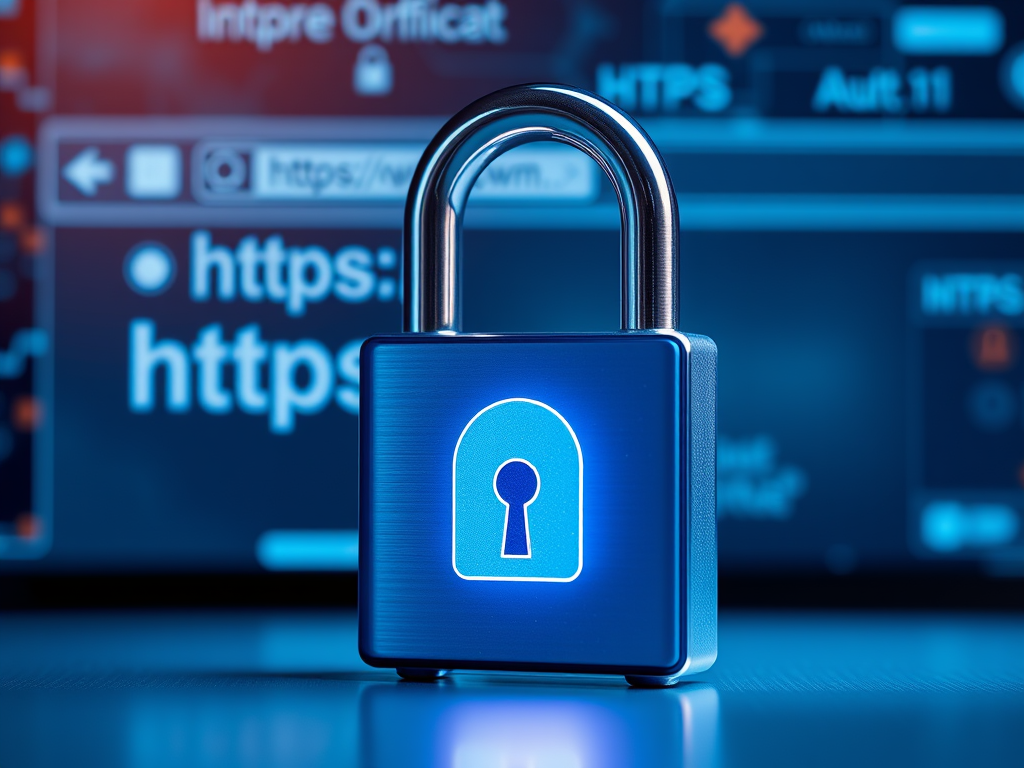
🖼️ Image 1: SSL Padlock + HTTPS Security

Source: Public domain / browser security documentation
Alt text: “Browser padlock showing an active HTTPS SSL connection.”
Why SSL Certificates Matter for Small Businesses
✔ 1. They Protect Customer Information
Even if you’re not running an online store, your website may handle:
- Contact form submissions
- Customer accounts
- Appointment bookings
- Login credentials
- Email newsletter signups
SSL prevents attackers from intercepting or altering this information.
✔ 2. They Build Instant Trust
Visitors look for the padlock icon — especially when entering any information. Without SSL, browsers show warnings like “Your connection is not private.”
You lose customers before the page even loads.
✔ 3. They Improve Google Rankings
Google confirmed HTTPS is a ranking factor.
Sites without SSL:
- Lose visibility
- Lose organic traffic
- Suffer lower user engagement
SSL is now part of basic SEO best practices.
✔ 4. They Enable Modern Features & APIs
Many web technologies require HTTPS, such as:
- Payment gateways
- Geolocation
- Progressive Web Apps (PWA)
- WebAuthn security keys
- Service workers
- Modern browser APIs
Without an SSL certificate, many essential features won’t work.
✔ 5. They Are Required for Compliance
Businesses handling customer data must use HTTPS to align with:
- PCI DSS (payment security)
- GDPR
- State privacy laws
- Standard IT security practices
Even simple sites need HTTPS to avoid unnecessary risk.
🖼️ Image 2: Diagram of SSL Encryption in Action

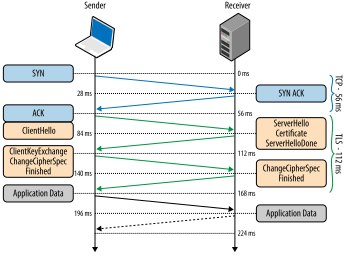
Source: Technical SSL/TLS documentation
Alt text: “Diagram illustrating how SSL/TLS encrypts data between browser and server.”
How SSL Works (Explained Simply)
1. Your browser connects to a website
It asks the server: “Are you who you say you are?”
2. The server sends its SSL certificate
This certificate is issued by a trusted Certificate Authority (CA).
3. The browser verifies the certificate
If valid → connection continues.
If invalid → browser shows a warning.
4. A secure encrypted session is created
All information is scrambled using cryptographic keys.
5. You get the padlock and HTTPS
Your connection is now encrypted end-to-end.
This happens in milliseconds — but it protects your visitors from:
- Data theft
- Credential stealing
- Man-in-the-middle attacks
- Session hijacking
Types of SSL Certificates (Which One Do You Need?)
There are 3 main types of SSL certificates:
1. DV (Domain Validated)
✔ Cheapest
✔ Fastest to issue
✔ Great for blogs, small businesses, personal sites
Validates: Domain ownership only
Recommended for:
- Small websites
- Informational business sites
- Landing pages
2. OV (Organization Validated)
✔ Shows your business name in the certificate
✔ Adds more trust and legitimacy
✔ Good for growing brands
Validates:
- Domain ownership
- Business identity
Recommended for:
- Business websites
- Appointment platforms
- Membership portals
3. EV (Extended Validation)
✔ Most trusted
✔ Highest level of identity verification
✔ Best for handling payments
Validates:
- Legal business identity
- Operational status
- Physical existence
Recommended for:
- E-commerce stores
- Finance, insurance, healthcare
- Government and enterprise sites
How to Choose the Right SSL for Your Site
Use this simple rule:
| Your Site Type | Recommended SSL |
|---|---|
| Simple business website | DV or OV |
| Website with login or accounts | OV |
| E-commerce store | OV or EV |
| Financial or medical website | EV |
| Multi-domain or subdomains | Wildcard or Multi-Domain SSL |
For most small businesses, DV or OV is more than enough.
Cybersecurity Benefits of SSL
SSL protects against common attacks:
- Man-in-the-Middle (MITM)
- Data sniffing / packet capture
- Session hijacking
- Phishing redirection
And when paired with Website Security services, your website becomes significantly harder to compromise.
How InternetHosting.us Makes SSL Easy
InternetHosting.us provides SSL certificates built for small and midsize businesses.
You get:
- Easy installation
- Automatic setup on our hosting platform
- Fast issuance times
- Affordable annual pricing
- Integration with our Website Security tools
- Free reissues if you switch hosting plans
You can choose from:
- DV SSL
- OV SSL
- EV SSL
- Wildcard SSL
- Multi-Domain SSL
👉 Explore SSL Certificates:
https://secureserver.internethosting.us/products/ssl
in Conclusion
An SSL certificate protects your customers, boosts SEO, builds trust, and unlocks the modern web. In 2025, HTTPS is not optional — it’s the foundation of a secure, professional online presence.
If you want easy, reliable SSL with expert support, InternetHosting.us has everything you need.
👉 Get your SSL certificate today and secure your website:
https://secureserver.internethosting.us/products/ssl